



For decades, African female entrepreneurs have long been the backbone of the continent’s informal economy by driving trade, sustaining households, and fueling local markets through micro and small-scale businesses.
- 1. Build support systems that enable female-owned business functions
- 2. Focus on skills that directly improve how money is made and managed
- 3. Strengthen global networks as business infrastructure
- 4. Use capital in ways that match every stage of business
- 5. Approach market opportunities with readiness, not just access
Despite their resilience and economic contribution, many remain trapped at the lowest income levels, operating in systems that limit their access to finance, digital tools, and opportunities needed to scale.
In 2025, the World Economic Forum revealed that 70% of jobs held by women in West Africa are in the informal cross-border economy.
Being well-positioned, women are actually the untapped resource to be an economic growth accelerator of Africa’s economy. Unfortunately, about 70% of women-owned MSMEs in developing economies lack adequate financing, contributing to the $300 billion financing gap annually.

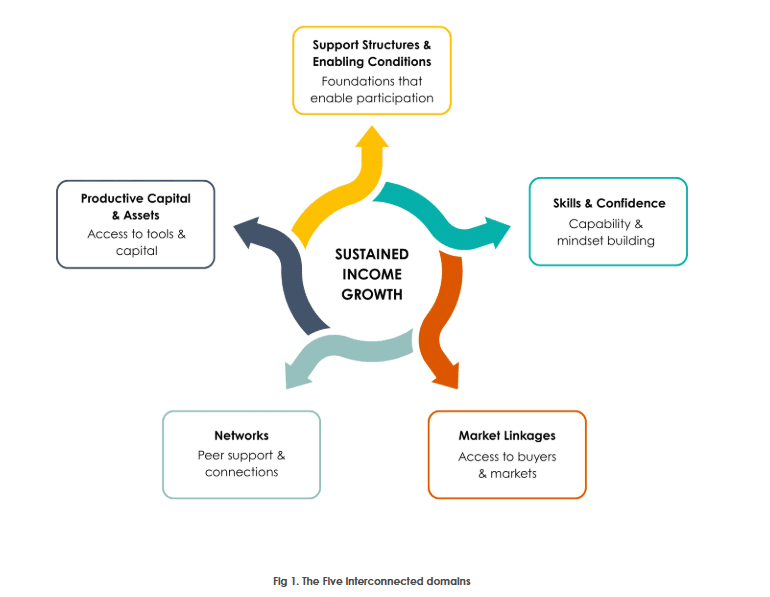
However, in 2026, this status quo is about to change. BFA Global, an impact innovation firm, has released new findings from its Women’s Economic Empowerment (WEE) Opportunity Leads Umbrella Program, identifying 5 critical, interconnected domains that drive income growth for low-income women micro-entrepreneurs.
According to the report, the insights emerged from a two-year collaboration with 11 enterprises in Kenya through the WEE Program to challenge the notion that income growth doesn’t follow a simple, linear path. Instead, sustained income gains depend on a set of reinforcing conditions working together.
“We started with a simple question: what does it really take to increase incomes for low-income women in practice, not just in theory. What we found is that no single intervention works in isolation. Income growth happens when multiple factors align,” Phoebe Kiboi and Maha Khan, co-authors of the report, said.
Through experimentation, landscape research, focus groups, interviews, and surveys, BFA Global identified 5 interconnected domains that together increased the incomes of low-income women micro-entrepreneurs.
1. Build support systems that enable female-owned business functions
For many African female entrepreneurs, income growth is shaped less by opportunity and more by the conditions around them. Time constraints, childcare responsibilities, mobility, and even community expectations often determine how consistently a business can operate.
What this means in practice is that growth happens faster when these pressures are reduced or managed. Some women achieve this by restructuring how they work by leveraging nearby drop-off points instead of home pickups, sharing responsibilities within their households, or operating within time windows that align with their daily realities.
Enterprises also play a role here by designing models that reduce friction, but the most effective systems are those that fit seamlessly into women’s existing lives.
2. Focus on skills that directly improve how money is made and managed
Skills contribute to income growth when they are practical, repeatable, and immediately applicable. Many women already can produce or sell, but what often makes the difference is how they manage pricing, cash flow, and reinvestment.
Simple practices like separating business income from personal spending or consistently reinvesting a portion of profits tend to have a compounding effect over time. Beyond technical skills, exposure to training or structured programs also shifts confidence.
As women begin to see themselves as capable business owners, they are more likely to take calculated steps that lead to growth.
3. Strengthen global networks as business infrastructure
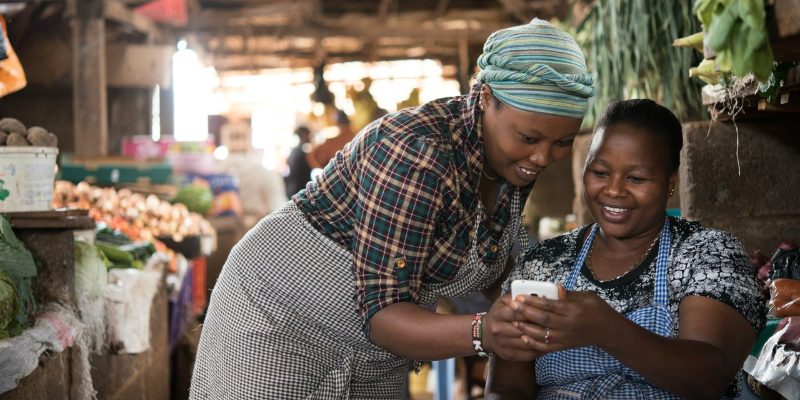
Across many African communities, women’s networks already function as informal systems that support business continuity. These networks are often built through savings groups, associations, or shared environments, and they quietly enable access to information, small capital, and customers.
When used intentionally, these networks become a powerful tool for growth. Women collaborate to manage stock, respond to demand, and navigate challenges together.
Enterprises can strengthen this by designing group-based solutions, but even without formal structures, these networks often provide stability that individual businesses cannot achieve alone.
4. Use capital in ways that match every stage of business
Access to money is important, but its impact depends on how well it aligns with the needs and readiness of the business. Capital tends to drive growth when there is already a clear understanding of demand, pricing, and operations.
For many low-income entrepreneurs, starting with smaller, lower-risk financial systems such as savings groups or gradual reinvestment creates a stronger foundation before taking on larger financial commitments.
Enterprises that recognise this often introduce phased or flexible financial models, allowing women to build capacity before scaling. In this way, capital becomes a tool for expansion rather than a source of pressure.
5. Approach market opportunities with readiness, not just access
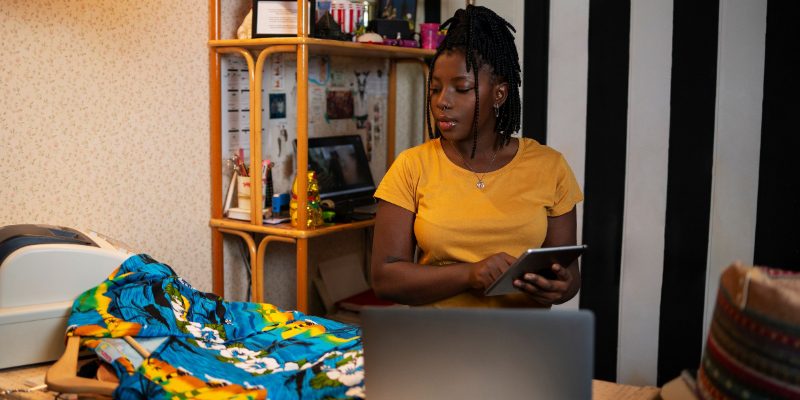
Expanding into new markets through digital platforms, larger buyers, or new locations can increase income potential, but only when the business is prepared to meet that demand consistently.
Women who succeed in new markets often combine access with readiness: they have the skills to deliver, the confidence to negotiate, and the systems to maintain quality.
Where these are missing, opportunities tend to remain underutilised. This is why market access works best when supported by strong foundations in skills, capital, networks, and supportive structures.