


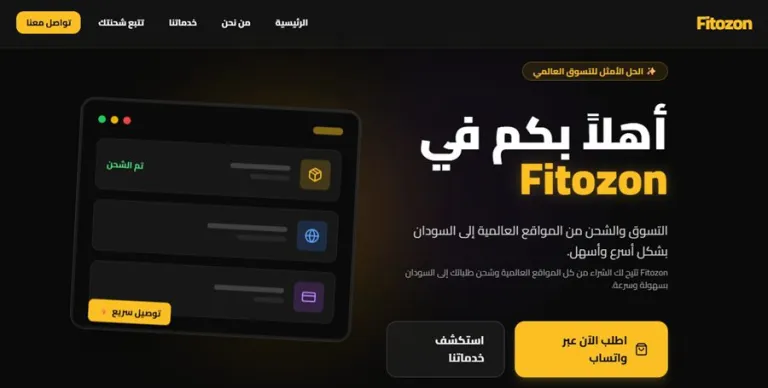
Sudanese startup Fitozon is a cross-border e-commerce facilitation platform enabling Sudanese consumers to shop from major international platforms — including Amazon, AliExpress, Noon, and Shein — and pay in their own currency.
Founded in 2023 by Ibrahim Algali, Fitozon handles everything on the customer’s behalf – purchasing, international shipping, customs clearance, and last-mile delivery.
“In a market where most people have no access to international payment methods or foreign currency, we act as the trusted bridge between global e-commerce and the Sudanese consumer,” Algali said.
Unsurprisingly, uptake has been strong. Fitozon recently crossed 40,000 orders processed for Sudanese consumers shopping from these global platforms, a milestone all the more impressive for the fact it has been achieved without external funding. Fitozon is fully self-funded by Algali.

“We have grown organically without external investment, which we see as a validation of the model’s unit economics,” he said. “Uptake has been strong and consistent since launch. We have processed over 40,000 orders to date, driven almost entirely by word of mouth and organic social media growth — including a TikTok following of over 42,000. Customer retention and repeat orders have been key drivers of our growth.”
The idea for Fitozon came from a direct personal observation of its founder.
“Sudanese consumers had growing awareness of global platforms but no practical way to access them. Sudan is one of Africa’s most underserved e-commerce markets. The combination of international sanctions history, a weak banking infrastructure, and limited awareness of global platforms created a massive gap between consumer demand and access,” Algali said. “Most Sudanese consumers cannot hold foreign currency accounts or use international credit cards — making direct purchases from Amazon or AliExpress practically impossible for the majority of the population.”
Fitozon has successfully filled this gap, and is now operating across Sudan, with logistics infrastructure covering the country’s major cities.
“Our next major milestone is the launch of a full local marketplace platform — enabling Sudanese merchants, brands, and individual sellers to list and sell products domestically. This will transform Fitozon from a cross-border facilitator into a comprehensive e-commerce ecosystem for Sudan,” said Algali.
The startup charges a service fee on each order, which covers its procurement, logistics, and operational costs with a margin.
“Over the past year, we have generated approximately US$122,000 in revenue. As a bootstrapped operation, we manage costs carefully and the business is operationally sustainable,” Algali said.
Building up a business of this kind in Sudan has not been without its challenges, however.
“Sudan’s logistics infrastructure is underdeveloped, which makes last-mile delivery unreliable in many areas,” Algali said. “Currency volatility adds complexity to pricing and cost management, as we operate in Sudanese pounds while absorbing international costs.”
Building consumer trust in a market with little e-commerce history required significant education and a strong customer service approach, he said.
“Finally, navigating international shipping and customs with no established framework for cross-border consumer e-commerce in Sudan meant we had to build our own operational processes largely from scratch,” said Algali.
But with that process complete, Fitozon looks set for further growth.