

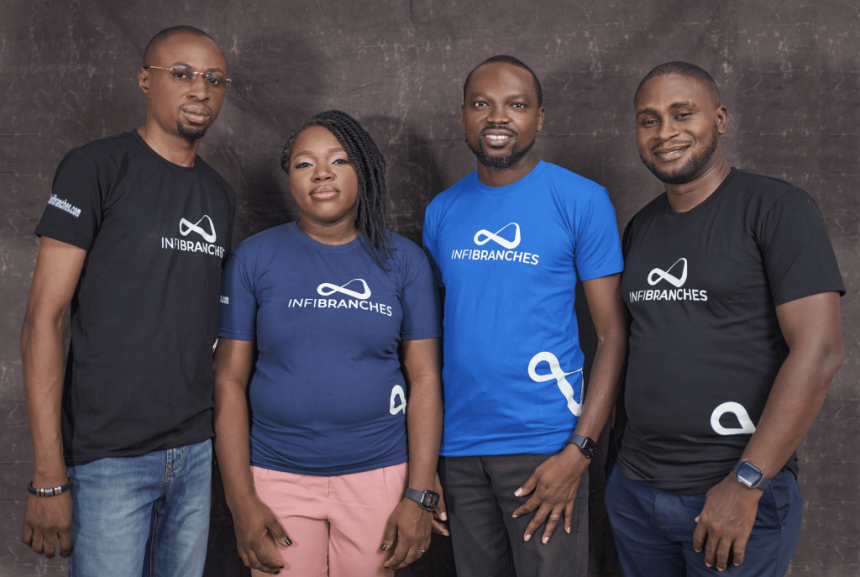
Nigerian startup Infibranches is powering last-mile customers with clean energy and inclusive financial services by aggregating verified demand and converting it into a demand pipeline for providers to act on.
Formed in 2019, Infibranches began life as a financial services company focused on boosting financial access in rural and peri-urban areas in Nigeria, and in doing so struck upon an important correlation. The startup realised that most people who lacked access to financial services also lacked access to energy, so it decided to create solutions for both.
“We bridge access gaps by aggregating verified demand from trusted distribution networks, communities, and digital channels, then convert it into a structured demand pipeline that energy providers and financiers can actually act on,” Olusola Owoyemi, Infibranches’ CEO, told TechDesk Africa.
Each customer is profiled for energy needs, location, and payment capacity, then matched with the right solar solution and flexible PAYG or BNPL financing.

“Our platform manages the full journey, onboarding, payments, IoT monitoring, after-sales support, and impact reporting, so systems stay online and revenues stay predictable. We turn fragmented, informal demand into bankable, trackable pipelines, by reducing risk, cutting costs, which scales clean energy access sustainably,” Owoyemi said.
“By supporting a broad distribution network, we enable job creation and empower local businesses. Through this integrated approach, Infibranches helps improve livelihoods and drive sustainable development across the regions we serve.”
From inception, the focus has been on building practical, scalable infrastructure, combining solar distribution, PAYG financing, and agent-led delivery to serve communities that are typically excluded from formal systems.
“Too many families in Africa still end their day when the sun goes down, not because they want to, but because they have no choice. Over 90 million live without reliable electricity, relying on candles, kerosene, or noisy diesel generators that are expensive and unsafe,” Owoyemi said.
“At the same time, more than 38 million adults are financially excluded; they’re locked out of financial systems unable to access credit, make secure payments, or build a financial identity. This lack of energy and financial access keeps people stuck, unable to grow businesses, learn after dark, or plan for the future.”
Infibranches was created to change that, and it has already had quite the impact. It has so far served more than 55,000 solar end-customers across over 300 communities through PAYG and distribution networks.
“This demonstrates market trust and repeat usage. We have built a data-driven demand pipeline with over 40 active partners leveraging our infrastructure. This reflects strong product-market fit and scalable uptake in underserved markets,” said Owoyemi.
The startup has also raised US$2 million in funding to continue driving access.
“We raised investment from All On, which has been instrumental in strengthening our core operations, product development, and geographic expansion. This is complemented by recurring revenues from our solar PAYG and fintech infrastructure platforms, alongside strategic partnerships that accelerate scale into underserved markets,” Owoyemi said.
Infibranches operates on a diversified revenue model that ensures operational sustainability and scalability.
“Our revenue comes from transaction fees on digital payments for energy, utilities, and financial services processed through our agent network. Additional income comes from sales and distribution of solar home systems and related products, leveraging OEM partnerships for competitive pricing. API service fees from fintechs, energy providers, and other partners using our infrastructure to serve their customers add recurring revenue,” said Owoyemi, who added that the startup has plans to expand into Ghana and Kenya in due course.