
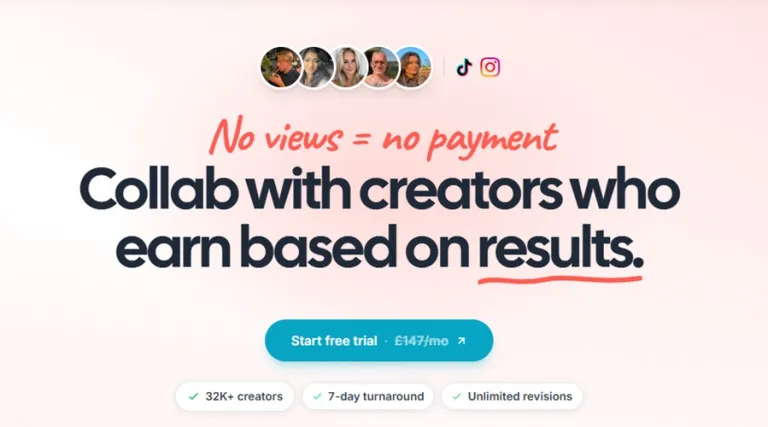
Ugandan startup Burst Creators is a performance-based influencer marketing platform connecting brands with local content creators, built around two products – a brand platform and a creator app.
Originally founded in Denmark in 2024, before Isak Bjerregaard acquired the distribution rights and brought the platform to Uganda in May of last year, Burst Creators allows brands to easily collaborate with influencers, who in turn earn based on results.
Brands use the platform to browse creators, check audience insights, set up campaigns, and track every result through a live dashboard. They control the comment section of every campaign video directly from the platform. And they only pay for views, so there’s no upfront fee and no hoping content performs. Built-in fraud detection flags any attempts to buy fake views.
On the creator side, the app is where Uganda’s content creators find paid work. They browse active campaigns, apply, upload their video if accepted, and once the brand approves it the content posts automatically to TikTok or Instagram. Earnings sit in the app until the creator is ready to withdraw.

“The simplest way to explain how it works is through a real campaign,” partner Tobias Mørch-Hansen told Disrupt Africa.
“SafeBoda ran a TikTok campaign for their SafeCar product last December. Eight creators, UGX1.5 million (US$400) budget. Because creators on Burst only earn when people actually watch their video, they made content people actually wanted to watch. The campaign was targeting around 60,000 views. Creators delivered over 3 million. The effective CPM came out at UGX497, roughly 40 times below what the campaign was originally priced at.”
Africa’s creator economy was worth US$3 billion in 2023 and is projected to reach US$18 billion by 2030.
“Burst is building the infrastructure for that market, starting in Uganda,” Mørch-Hansen said.
The gap, he said, was hard to miss.
“Influencer marketing in Uganda ran on guesswork. Creators, without any real benchmark for what to charge, inflated their rates. Agencies piled on their own markup when brands came asking. And reporting? Brands got screenshots, often tampered with, and were expected to trust them,” Mørch-Hansen said.
“There was no way to know if the money was actually doing anything. And nobody in the market seemed bothered by that.”
Whereas Kenya has Wowzi, and a handful of others, Uganda has no direct competitor.
“Burst is the only platform in the market where brands pay per view, not per post. No views, no pay. That changes the incentive for everyone. Creators make content people actually watch. Brands get numbers they can trust. The whole dynamic shifts,” said Mørch-Hansen.
The self-funded Burst has passed 15,000 app downloads, most of them acquired through the platform itself.
“Creators who got paid, saw it was real, and made testimonial videos off their own back. That brought in more creators,” Mørch-Hansen said.
Over UGX100 million (US$26,000) has been paid out to creators, and campaigns have generated more than 17 million views, averaging 40,500 per video. A notable partnership is with the European Union (EU), which is using Burst’s creator network to highlight the EU’s work in Uganda.
“The milestone we’re most proud of isn’t a number. Creators with between 10,000 and 50,000 followers, the ones traditional brand deals ignore because their follower count doesn’t look big enough on paper, are now making real, regular income from their content. That wasn’t possible before Burst,” said Mørch-Hansen.
Over 100 campaigns have run through Burst.
“A lot of them were one-offs. But more brands are coming back for second and third campaigns, and the creator network has grown to over 600 approved Ugandan creators and 200 in Kenya,” he said.
Burst, which monetises via subscriptions to access the platform, and a 20 per cent commission on creator earnings from campaigns, is already thinking beyond its home market. Uganda was always the test, not the destination.
“The model needed to be proven in one market before it could scale, and Uganda proved it. Kenya is the natural next step, a larger economy, a more developed creator market, and one where Burst already has over 200 approved creators waiting,” Mørch-Hansen said.
“From Kenya the plan moves to East Africa as a region. Rwanda, Tanzania, Ethiopia. Markets where the same problem exists: brands overpaying for influencer marketing they can’t measure, creators undercharging because they have no benchmark, and no platform built to fix either. After East Africa, the bigger African markets – Nigeria, Ghana, South Africa. The creator economy across the continent is moving fast and the infrastructure to serve it barely exists. That’s the opportunity Burst is building toward.”